Bertrand Picard, a Swiss adventurer is all set to unveil a prototype of a solar-powered plane he hopes eventually to fly around the world.
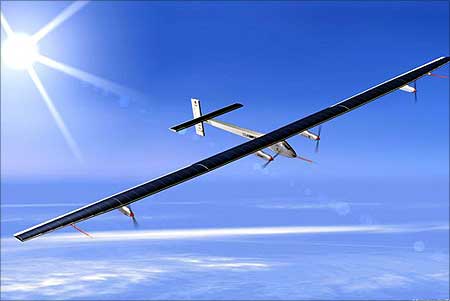
According to a report by BBC News, the initial version of the solar plane, spanning 61 metres but weighing just 1,500 kg, will undergo trials to prove it can fly at night.
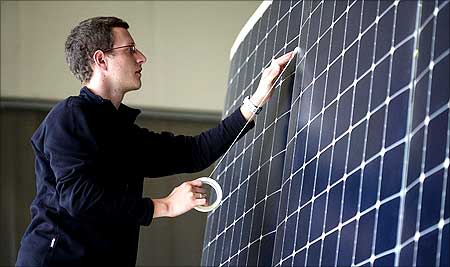
Picard, who made history by circling the globe non-stop in a balloon in 1999, said he wants to demonstrate the potential of renewable energies.
Picard's Solar Impulse team has invested tremendous energy in trying to find what they believe is a breakthrough design.
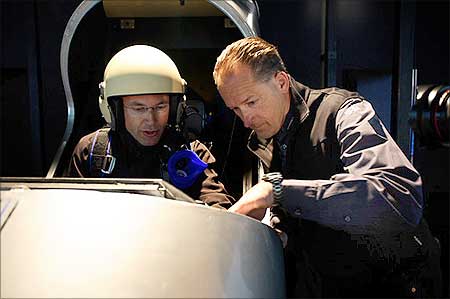
"I love this type of vision where you set the goal and then you try to find a way to reach it, because this is challenging," he told BBC News.
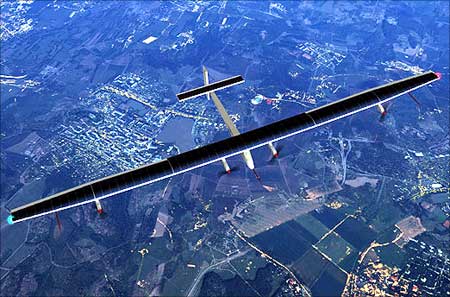
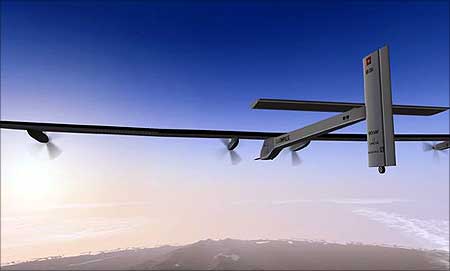
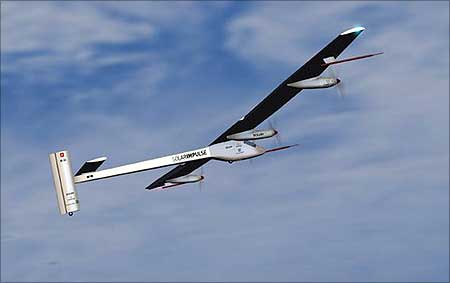
Called the HB-SIA, the solar plane has the look of a glider, but is on the scale -- in terms of its width -- of a modern airliner.
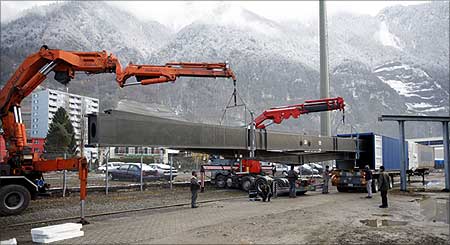
The aeroplane incorporates composite materials to keep it extremely light and uses super-efficient solar cells, batteries, motors and propellers to get it through the dark hours.
Picard will begin testing with short runway flights in which the plane lifts just a few metres into the air.
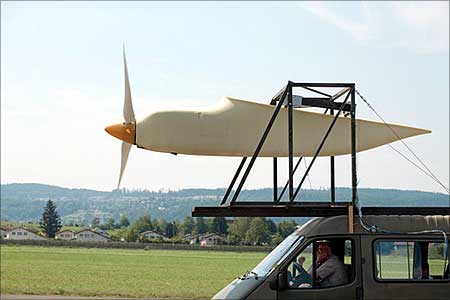
As confidence in the machine develops, the team will move to a day-night circle. This has never been done before in a piloted solar-powered plane.
HB-SIA should be succeeded by HB-SIB. It is likely to be bigger, and will incorporate a pressurized capsule and better avionics.
It is probable that Picard will follow a route around the world in this aeroplane close to the path he took in the record-breaking Breitling Orbiter 3 balloon -- going from the United Arab Emirates, to China, to Hawaii, across the southern US, southern Europe, and back to the UAE.
"The real success for Solar Impulse would be to have enough millions of people following the project, being enthusiastic about it, and saying, 'if they managed to do it around the world with renewable energies and energy savings, then we should be able to do it in our daily life,'" said Picard.
 © 2025 Rediff.com - Investor Information - Advertise with us - Disclaimer - Privacy Policy - Feedback - About us - Terms of use - Grievances