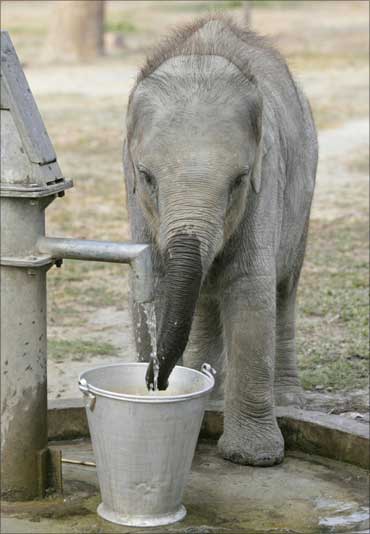
India and China, home to more than a third of the world's population, have made "considerable progress" in providing drinking water to their people, according to a new UNICEF-WHO report.
"Both countries have made considerable progress," said the report entitled 'Progress on Sanitation and Drinking Water'.
The study found that in India, 88 per cent of the population of 1.2 billion use drinking water from improved sources of water as compared to 72 per cent in 1990 while in China, 89 per cent of the population of 1.3 billion use drinking water from improved sources, up from 67 per cent in 1990. ...
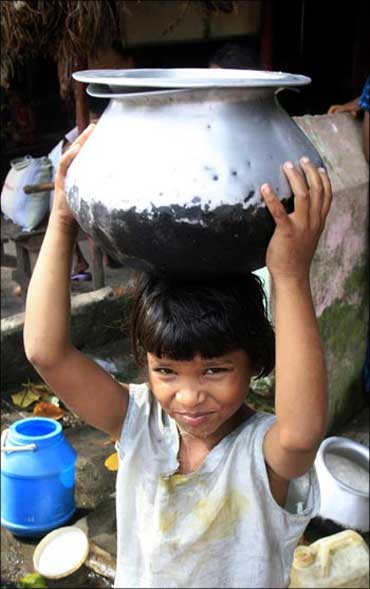
Improved water sources include public standpipes, boreholes, protected dug wells and springs, rainwater collection and household connections.
By the nature of their construction, they "adequately protect the source from outside contamination, in particular from faecal matter," according to WHO.
The report noted that China and India together account for a 47 per cent share, of the 1.8 billion people that gained access to improved drinking water sources between 1990-2008.
"This share is almost equally distributed between the two countries. Obviously, these two countries heavily influence the global trend," it said. "Therefore, the ability to reach the MDG (Millennium Development Goals) target is highly dependent on the performance of these two countries."
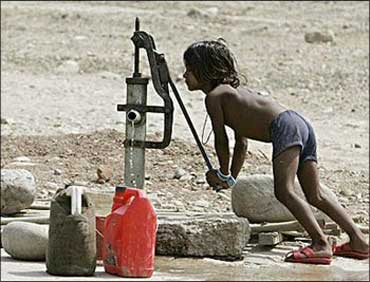
The report also finds that 87 per cent of the world's population or approximately 5.9 billion people are using safe drinking-water sources, which means that the world is on track to meet or even exceed the drinking-water target of the Millennium Development Goals.
It highlights that 3.8 billion people, or 57 per cent of the world's population, get their drinking water from a piped connection that provides running water in their homes or compound.
However, only 60 per cent of the population in Sub-Saharan Africa and 50 per cent of the population in Oceania use improved sources of drinking-water, which is causing both these regions to lag behind.
 © 2025 Rediff.com - Investor Information - Advertise with us - Disclaimer - Privacy Policy - Feedback - About us - Terms of use - Grievances